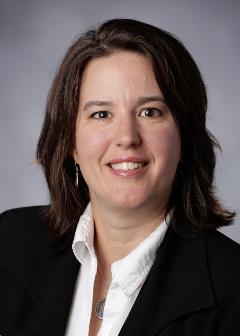
In our 1-hour webinar on the 12 of July 2017 (4:30pm CET, 3:30pm BST, 10:30am EST) we will have a presentation by Conny Berlin who is the industry project leader of the public-private IMI PREFER project and Rachael DiSantostefano, a task co-leader on the IMI PREFER project.
Abstract
The main objective of the IMI PREFER project is to strengthen patient-centric decision making throughout the life cycle of medicinal products by developing evidence-based recommendations to guide industry, Regulatory Authorities, HTA bodies, reimbursement agencies, academia, and health care professionals on how and when patient-preference studies should be performed and the results used to support and inform decision making.
While over the last years all stakeholders gained experience individually how to engage patients for decision making this project aims to bring all stakeholders together taking a structured approach to determine their needs, expectations, and concerns regarding the use of patient-preference information and methodologies for patient-preference elicitation.
Methodologies for patient value elicitation are available and have been used frequently in market research, in health economics and outcomes research to substantiate real-life evidence. Further structured research has been done in projects like IMI PROTECT but there is no systematic use of these methodologies in the regulatory licensing processes yet.
The presentation will address
Objective of PREFER
Changing environment
Patient preference study example
PREFER participants
PREFER project approach & status
About the Presenters
Conny Berlin, Global Head Quantitative Safety & Epidemiology,
Novartis International AG
Conny Berlin leads the Quantitative Safety & Epidemiology group at Novartis International AG. She holds a degree in mathematics from the University of Rostock, Germany and has more than 25 years of experience within the pharmaceutical industry.
Conny Berlin has a profound knowledge of quantitative methodology as applied to clinical and observational data and to spontaneous reports to respond to safety and benefit-risk questions during drug development and post-approval.
Conny Berlin is a member of the company’s internal Medical Safety Review Board and of the Real World Evidence Leadership Team.
She is well experienced in managing projects, leading and coordinating interdisciplinary teams. Conny Berlin is the industry project leader of the public-private IMI PREFER project.
Relevant references
Esther W. de Bekker-Grob, Conny Berlin et al. Giving Patients’ Preferences a Voice in Medical Treatment Life Cycle: The PREFER Public–Private Project. Patient: Editorial
Participant of the CIOMS working group X on "Evidence Synthesis and Meta-Analysis for Drug Safety"; report published in 2016
Berlin C, Blanch C et al. Are all quantitative postmarketing signal detection methods equal? Performance characteristics of logistic regression and Multi-item Gamma Poisson Shrinker. Pharmacoepidemiology and Drug Safety. 2011: 622-630
Rachael DiSantostefano, PhD, MS is a Director, Benefit-Risk in Epidemiology at Janssen R&D
Rachael L. DiSantostefano has nearly 25 years of pharmaceutical research experience across the quantitative disciplines of epidemiology, biostatistics, and health outcomes. She is currently responsible for guiding clinical teams in structured benefit-risk assessment, including the use of both qualitative and quantitative methods. She received her PhD in Health Policy and her Master’s degree in Biostatistics at the University of North Carolina Gillings School of Global Public Health. Prior to joining Janssen in 2015, she was an epidemiologist at another pharmaceutical company for 10 years, where she evaluated medication safety and contributed to benefit-risk assessment in regulatory submissions and at FDA Advisory Committee meetings. She is currently active as a task co-leader on the IMI PREFER project and an active member of the Benefit-Risk Assessment Communication and Evaluation Special Interest Group (BRACE-SIG) within the International Society for Pharmacoepidemiology.
In our 1-hour webinar on the 12 of July 2017 (4:30pm CET, 3:30pm BST, 10:30am EST) we will have a presentation by Conny Berlin who is the industry project leader of the public-private IMI PREFER project and Rachael DiSantostefano, a task co-leader on the IMI PREFER project.
Abstract
The main objective of the IMI PREFER project is to strengthen patient-centric decision making throughout the life cycle of medicinal products by developing evidence-based recommendations to guide industry, Regulatory Authorities, HTA bodies, reimbursement agencies, academia, and health care professionals on how and when patient-preference studies should be performed and the results used to support and inform decision making.
While over the last years all stakeholders gained experience individually how to engage patients for decision making this project aims to bring all stakeholders together taking a structured approach to determine their needs, expectations, and concerns regarding the use of patient-preference information and methodologies for patient-preference elicitation.
Methodologies for patient value elicitation are available and have been used frequently in market research, in health economics and outcomes research to substantiate real-life evidence. Further structured research has been done in projects like IMI PROTECT but there is no systematic use of these methodologies in the regulatory licensing processes yet.
The presentation will address
Objective of PREFER
Changing environment
Patient preference study example
PREFER participants
PREFER project approach & status
About the Presenters
Conny Berlin, Global Head Quantitative Safety & Epidemiology,
Novartis International AG
Conny Berlin leads the Quantitative Safety & Epidemiology group at Novartis International AG. She holds a degree in mathematics from the University of Rostock, Germany and has more than 25 years of experience within the pharmaceutical industry.
Conny Berlin has a profound knowledge of quantitative methodology as applied to clinical and observational data and to spontaneous reports to respond to safety and benefit-risk questions during drug development and post-approval.
Conny Berlin is a member of the company’s internal Medical Safety Review Board and of the Real World Evidence Leadership Team.
She is well experienced in managing projects, leading and coordinating interdisciplinary teams. Conny Berlin is the industry project leader of the public-private IMI PREFER project.
Relevant references
Esther W. de Bekker-Grob, Conny Berlin et al. Giving Patients’ Preferences a Voice in Medical Treatment Life Cycle: The PREFER Public–Private Project. Patient: Editorial
Participant of the CIOMS working group X on "Evidence Synthesis and Meta-Analysis for Drug Safety"; report published in 2016
Berlin C, Blanch C et al. Are all quantitative postmarketing signal detection methods equal? Performance characteristics of logistic regression and Multi-item Gamma Poisson Shrinker. Pharmacoepidemiology and Drug Safety. 2011: 622-630
Rachael DiSantostefano, PhD, MS is a Director, Benefit-Risk in Epidemiology at Janssen R&D
Rachael L. DiSantostefano has nearly 25 years of pharmaceutical research experience across the quantitative disciplines of epidemiology, biostatistics, and health outcomes. She is currently responsible for guiding clinical teams in structured benefit-risk assessment, including the use of both qualitative and quantitative methods. She received her PhD in Health Policy and her Master’s degree in Biostatistics at the University of North Carolina Gillings School of Global Public Health. Prior to joining Janssen in 2015, she was an epidemiologist at another pharmaceutical company for 10 years, where she evaluated medication safety and contributed to benefit-risk assessment in regulatory submissions and at FDA Advisory Committee meetings. She is currently active as a task co-leader on the IMI PREFER project and an active member of the Benefit-Risk Assessment Communication and Evaluation Special Interest Group (BRACE-SIG) within the International Society for Pharmacoepidemiology.
In our 1-hour webinar on the 12 of July 2017 (4:30pm CET, 3:30pm BST, 10:30am EST) we will have a presentation by Conny Berlin who is the industry project leader of the public-private IMI PREFER project and Rachael DiSantostefano, a task co-leader on the IMI PREFER project.
Abstract
The main objective of the IMI PREFER project is to strengthen patient-centric decision making throughout the life cycle of medicinal products by developing evidence-based recommendations to guide industry, Regulatory Authorities, HTA bodies, reimbursement agencies, academia, and health care professionals on how and when patient-preference studies should be performed and the results used to support and inform decision making.
While over the last years all stakeholders gained experience individually how to engage patients for decision making this project aims to bring all stakeholders together taking a structured approach to determine their needs, expectations, and concerns regarding the use of patient-preference information and methodologies for patient-preference elicitation.
Methodologies for patient value elicitation are available and have been used frequently in market research, in health economics and outcomes research to substantiate real-life evidence. Further structured research has been done in projects like IMI PROTECT but there is no systematic use of these methodologies in the regulatory licensing processes yet.
The presentation will address
Objective of PREFER
Changing environment
Patient preference study example
PREFER participants
PREFER project approach & status
About the Presenters
Conny Berlin, Global Head Quantitative Safety & Epidemiology,
Novartis International AG
Conny Berlin leads the Quantitative Safety & Epidemiology group at Novartis International AG. She holds a degree in mathematics from the University of Rostock, Germany and has more than 25 years of experience within the pharmaceutical industry.
Conny Berlin has a profound knowledge of quantitative methodology as applied to clinical and observational data and to spontaneous reports to respond to safety and benefit-risk questions during drug development and post-approval.
Conny Berlin is a member of the company’s internal Medical Safety Review Board and of the Real World Evidence Leadership Team.
She is well experienced in managing projects, leading and coordinating interdisciplinary teams. Conny Berlin is the industry project leader of the public-private IMI PREFER project.
Relevant references
Esther W. de Bekker-Grob, Conny Berlin et al. Giving Patients’ Preferences a Voice in Medical Treatment Life Cycle: The PREFER Public–Private Project. Patient: Editorial
Participant of the CIOMS working group X on "Evidence Synthesis and Meta-Analysis for Drug Safety"; report published in 2016
Berlin C, Blanch C et al. Are all quantitative postmarketing signal detection methods equal? Performance characteristics of logistic regression and Multi-item Gamma Poisson Shrinker. Pharmacoepidemiology and Drug Safety. 2011: 622-630
Rachael DiSantostefano, PhD, MS is a Director, Benefit-Risk in Epidemiology at Janssen R&D
Rachael L. DiSantostefano has nearly 25 years of pharmaceutical research experience across the quantitative disciplines of epidemiology, biostatistics, and health outcomes. She is currently responsible for guiding clinical teams in structured benefit-risk assessment, including the use of both qualitative and quantitative methods. She received her PhD in Health Policy and her Master’s degree in Biostatistics at the University of North Carolina Gillings School of Global Public Health. Prior to joining Janssen in 2015, she was an epidemiologist at another pharmaceutical company for 10 years, where she evaluated medication safety and contributed to benefit-risk assessment in regulatory submissions and at FDA Advisory Committee meetings. She is currently active as a task co-leader on the IMI PREFER project and an active member of the Benefit-Risk Assessment Communication and Evaluation Special Interest Group (BRACE-SIG) within the International Society for Pharmacoepidemiology.
In our 1-hour webinar on the 12 of July 2017 (4:30pm CET, 3:30pm BST, 10:30am EST) we will have a presentation by Conny Berlin who is the industry project leader of the public-private IMI PREFER project and Rachael DiSantostefano, a task co-leader on the IMI PREFER project.
Abstract
The main objective of the IMI PREFER project is to strengthen patient-centric decision making throughout the life cycle of medicinal products by developing evidence-based recommendations to guide industry, Regulatory Authorities, HTA bodies, reimbursement agencies, academia, and health care professionals on how and when patient-preference studies should be performed and the results used to support and inform decision making.
While over the last years all stakeholders gained experience individually how to engage patients for decision making this project aims to bring all stakeholders together taking a structured approach to determine their needs, expectations, and concerns regarding the use of patient-preference information and methodologies for patient-preference elicitation.
Methodologies for patient value elicitation are available and have been used frequently in market research, in health economics and outcomes research to substantiate real-life evidence. Further structured research has been done in projects like IMI PROTECT but there is no systematic use of these methodologies in the regulatory licensing processes yet.
The presentation will address
Objective of PREFER
Changing environment
Patient preference study example
PREFER participants
PREFER project approach & status
About the Presenters
Conny Berlin, Global Head Quantitative Safety & Epidemiology,
Novartis International AG
Conny Berlin leads the Quantitative Safety & Epidemiology group at Novartis International AG. She holds a degree in mathematics from the University of Rostock, Germany and has more than 25 years of experience within the pharmaceutical industry.
Conny Berlin has a profound knowledge of quantitative methodology as applied to clinical and observational data and to spontaneous reports to respond to safety and benefit-risk questions during drug development and post-approval.
Conny Berlin is a member of the company’s internal Medical Safety Review Board and of the Real World Evidence Leadership Team.
She is well experienced in managing projects, leading and coordinating interdisciplinary teams. Conny Berlin is the industry project leader of the public-private IMI PREFER project.
Relevant references
Esther W. de Bekker-Grob, Conny Berlin et al. Giving Patients’ Preferences a Voice in Medical Treatment Life Cycle: The PREFER Public–Private Project. Patient: Editorial
Participant of the CIOMS working group X on "Evidence Synthesis and Meta-Analysis for Drug Safety"; report published in 2016
Berlin C, Blanch C et al. Are all quantitative postmarketing signal detection methods equal? Performance characteristics of logistic regression and Multi-item Gamma Poisson Shrinker. Pharmacoepidemiology and Drug Safety. 2011: 622-630
Rachael DiSantostefano, PhD, MS is a Director, Benefit-Risk in Epidemiology at Janssen R&D
Rachael L. DiSantostefano has nearly 25 years of pharmaceutical research experience across the quantitative disciplines of epidemiology, biostatistics, and health outcomes. She is currently responsible for guiding clinical teams in structured benefit-risk assessment, including the use of both qualitative and quantitative methods. She received her PhD in Health Policy and her Master’s degree in Biostatistics at the University of North Carolina Gillings School of Global Public Health. Prior to joining Janssen in 2015, she was an epidemiologist at another pharmaceutical company for 10 years, where she evaluated medication safety and contributed to benefit-risk assessment in regulatory submissions and at FDA Advisory Committee meetings. She is currently active as a task co-leader on the IMI PREFER project and an active member of the Benefit-Risk Assessment Communication and Evaluation Special Interest Group (BRACE-SIG) within the International Society for Pharmacoepidemiology.
In our 1-hour webinar on the 12 of July 2017 (4:30pm CET, 3:30pm BST, 10:30am EST) we will have a presentation by Conny Berlin who is the industry project leader of the public-private IMI PREFER project and Rachael DiSantostefano, a task co-leader on the IMI PREFER project.
Abstract
The main objective of the IMI PREFER project is to strengthen patient-centric decision making throughout the life cycle of medicinal products by developing evidence-based recommendations to guide industry, Regulatory Authorities, HTA bodies, reimbursement agencies, academia, and health care professionals on how and when patient-preference studies should be performed and the results used to support and inform decision making.
While over the last years all stakeholders gained experience individually how to engage patients for decision making this project aims to bring all stakeholders together taking a structured approach to determine their needs, expectations, and concerns regarding the use of patient-preference information and methodologies for patient-preference elicitation.
Methodologies for patient value elicitation are available and have been used frequently in market research, in health economics and outcomes research to substantiate real-life evidence. Further structured research has been done in projects like IMI PROTECT but there is no systematic use of these methodologies in the regulatory licensing processes yet.
The presentation will address
Objective of PREFER
Changing environment
Patient preference study example
PREFER participants
PREFER project approach & status
About the Presenters
Conny Berlin, Global Head Quantitative Safety & Epidemiology,
Novartis International AG
Conny Berlin leads the Quantitative Safety & Epidemiology group at Novartis International AG. She holds a degree in mathematics from the University of Rostock, Germany and has more than 25 years of experience within the pharmaceutical industry.
Conny Berlin has a profound knowledge of quantitative methodology as applied to clinical and observational data and to spontaneous reports to respond to safety and benefit-risk questions during drug development and post-approval.
Conny Berlin is a member of the company’s internal Medical Safety Review Board and of the Real World Evidence Leadership Team.
She is well experienced in managing projects, leading and coordinating interdisciplinary teams. Conny Berlin is the industry project leader of the public-private IMI PREFER project.
Relevant references
Esther W. de Bekker-Grob, Conny Berlin et al. Giving Patients’ Preferences a Voice in Medical Treatment Life Cycle: The PREFER Public–Private Project. Patient: Editorial
Participant of the CIOMS working group X on "Evidence Synthesis and Meta-Analysis for Drug Safety"; report published in 2016
Berlin C, Blanch C et al. Are all quantitative postmarketing signal detection methods equal? Performance characteristics of logistic regression and Multi-item Gamma Poisson Shrinker. Pharmacoepidemiology and Drug Safety. 2011: 622-630
Rachael DiSantostefano, PhD, MS is a Director, Benefit-Risk in Epidemiology at Janssen R&D
Rachael L. DiSantostefano has nearly 25 years of pharmaceutical research experience across the quantitative disciplines of epidemiology, biostatistics, and health outcomes. She is currently responsible for guiding clinical teams in structured benefit-risk assessment, including the use of both qualitative and quantitative methods. She received her PhD in Health Policy and her Master’s degree in Biostatistics at the University of North Carolina Gillings School of Global Public Health. Prior to joining Janssen in 2015, she was an epidemiologist at another pharmaceutical company for 10 years, where she evaluated medication safety and contributed to benefit-risk assessment in regulatory submissions and at FDA Advisory Committee meetings. She is currently active as a task co-leader on the IMI PREFER project and an active member of the Benefit-Risk Assessment Communication and Evaluation Special Interest Group (BRACE-SIG) within the International Society for Pharmacoepidemiology.
In our 1-hour webinar on the 12 of July 2017 (4:30pm CET, 3:30pm BST, 10:30am EST) we will have a presentation by Conny Berlin who is the industry project leader of the public-private IMI PREFER project and Rachael DiSantostefano, a task co-leader on the IMI PREFER project.
Abstract
The main objective of the IMI PREFER project is to strengthen patient-centric decision making throughout the life cycle of medicinal products by developing evidence-based recommendations to guide industry, Regulatory Authorities, HTA bodies, reimbursement agencies, academia, and health care professionals on how and when patient-preference studies should be performed and the results used to support and inform decision making.
While over the last years all stakeholders gained experience individually how to engage patients for decision making this project aims to bring all stakeholders together taking a structured approach to determine their needs, expectations, and concerns regarding the use of patient-preference information and methodologies for patient-preference elicitation.
Methodologies for patient value elicitation are available and have been used frequently in market research, in health economics and outcomes research to substantiate real-life evidence. Further structured research has been done in projects like IMI PROTECT but there is no systematic use of these methodologies in the regulatory licensing processes yet.
The presentation will address
Objective of PREFER
Changing environment
Patient preference study example
PREFER participants
PREFER project approach & status
About the Presenters
Conny Berlin, Global Head Quantitative Safety & Epidemiology,
Novartis International AG
Conny Berlin leads the Quantitative Safety & Epidemiology group at Novartis International AG. She holds a degree in mathematics from the University of Rostock, Germany and has more than 25 years of experience within the pharmaceutical industry.
Conny Berlin has a profound knowledge of quantitative methodology as applied to clinical and observational data and to spontaneous reports to respond to safety and benefit-risk questions during drug development and post-approval.
Conny Berlin is a member of the company’s internal Medical Safety Review Board and of the Real World Evidence Leadership Team.
She is well experienced in managing projects, leading and coordinating interdisciplinary teams. Conny Berlin is the industry project leader of the public-private IMI PREFER project.
Relevant references
Esther W. de Bekker-Grob, Conny Berlin et al. Giving Patients’ Preferences a Voice in Medical Treatment Life Cycle: The PREFER Public–Private Project. Patient: Editorial
Participant of the CIOMS working group X on "Evidence Synthesis and Meta-Analysis for Drug Safety"; report published in 2016
Berlin C, Blanch C et al. Are all quantitative postmarketing signal detection methods equal? Performance characteristics of logistic regression and Multi-item Gamma Poisson Shrinker. Pharmacoepidemiology and Drug Safety. 2011: 622-630
Rachael DiSantostefano, PhD, MS is a Director, Benefit-Risk in Epidemiology at Janssen R&D
Rachael L. DiSantostefano has nearly 25 years of pharmaceutical research experience across the quantitative disciplines of epidemiology, biostatistics, and health outcomes. She is currently responsible for guiding clinical teams in structured benefit-risk assessment, including the use of both qualitative and quantitative methods. She received her PhD in Health Policy and her Master’s degree in Biostatistics at the University of North Carolina Gillings School of Global Public Health. Prior to joining Janssen in 2015, she was an epidemiologist at another pharmaceutical company for 10 years, where she evaluated medication safety and contributed to benefit-risk assessment in regulatory submissions and at FDA Advisory Committee meetings. She is currently active as a task co-leader on the IMI PREFER project and an active member of the Benefit-Risk Assessment Communication and Evaluation Special Interest Group (BRACE-SIG) within the International Society for Pharmacoepidemiology.
PSI Book Club: Change: How organisations achieve hard-to-imagine results in uncertain and volatile times
Organizations have to adapt to the transforming landscape of our industry to ensure they continue to be successful in the future. Many of us are feeling the impact of organizational change. By reading John P Kotter’s book we can understand about organizational change and learn how to thrive, rather than just survive, through change.
Change, by John P Kotter (and his team), is a summary of all that he has learned over his decades of research and leading change. His book describes why many current approaches to change are inadequate and explains why new solutions need to give people a voice and a role in a new, change-embracing organization.
Develop your understanding of organisational change and become empowered to be part of your organisation’s change, by reading Change by John P Kotter and joining the Sept-Dec 2025 book club. You will be invited to join facilitated discussions of the concepts and ideas and apply knowledge from the book in-between sessions.
This two-afternoon virtual course provides a practical introduction to adaptive clinical trials, focusing on the concepts, applications, and regulatory principles outlined in ICH E20 through real-world examples and case studies.
PSI Vaccines SIG Webinar: Statistical Immune Correlate Analysis of Hemagglutination Inhibition Titers for an mRNA-based Influenza Vaccine
This 1-hour webinar is designed for statisticians with an interest in vaccine development, to learn about the recent application of statistical immune correlate analysis in vaccine development. Specifically, an application of such analyses to evaluate hemagglutination inhibition titers for an influenza vaccine
PSI Careers - MEDMathS: Medicine Empowered by Data, Maths and Statistics
Date: Wednesday 4th November 2026
A careers talk about medical statistics and how it plays a crucial role in developing new medicines. Learn about the field of medical statistics and how it plays a crucial role in developing groundbreaking new medicines, vaccines and healthcare products.
Joint PSI/EFSPI Visualisation SIG 'Wonderful Wednesday' Webinars
Our monthly webinar explores examples of innovative data visualisations relevant to our day to day work. Each month a new dataset is provided from a clinical trial or other relevant example, and participants are invited to submit a graphic that communicates interesting and relevant characteristics of the data.
Date: 18 November 2026
This is an excellent opportunity for students to find out more about the field of medical statistics, talk to people from different organisations and make contacts for the future. All students currently studying for a mathematics or statistics-related BSc, MSc or PhD are invited to attend, and we welcome interest from exhibitors too.
Our monthly webinar series allows attendees to gain practical knowledge and skills in open-source coding and tools, with a focus on applications in the pharmaceutical industry.
Aligning Estimation with the Clinical Question of Interest
This webinar will focus on aligning estimation to estimands. How do different strategies for handling intercurrent events and missing data handling influence the choice of estimation method, with illustration using a case study.
This networking event is aimed at statisticians that are new to the pharmaceutical industry who wish to meet colleagues from different companies and backgrounds.
PSI Careers Coaching Series: Peer Support Initiative
This 10-month peer support programme is aimed at professionals with five or more years of experience who are seeking structured development and connection with peers at a similar career stage. Through 5 bi-monthly topics, participants will engage in coach-led presentations, small-group discussions, and regular progress reviews focused on achieving tangible outcomes.
In this vital role you will generate evidence to meet Health Technology Assessment (HTA) requirements, while ensuring that the analyses performed meet required standards and are robust and valid.
What if your placement year meant more than observing from the sidelines? Join Novartis and spend 12 months working hands-on with real clinical trial and healthcare data, helping to advance medicines that could improve patients' lives.
Phastar – Associate Director, Statistics – Real World Evidence (RWE)
As an Associate Director, Statistics (RWE) you will focus on supporting one of our key pharmaceutical clients within our FSP function. This will be a hands-on technical role, with oversight responsibilities and cross-functional exposure.
Phastar – Principal Statistician – Real World Evidence (RWE)
We are seeking an experienced Statistician to join our FSP team to support one of our fantastic and well-known global pharmaceutical clients, at Principal level.
We are seeking an experienced Statistician to join our FSP team to support one of our fantastic and well-known global pharmaceutical clients, at either Senior or Principal levels.