BEGIN:VCALENDAR
VERSION:2.0
METHOD:PUBLISH
PRODID:-//Telerik Inc.//Sitefinity CMS 13.3//EN
BEGIN:VTIMEZONE
TZID:GMT Standard Time
BEGIN:STANDARD
DTSTART:20251002T020000
RRULE:FREQ=YEARLY;BYDAY=-1SU;BYHOUR=2;BYMINUTE=0;BYMONTH=10
TZNAME:GMT Standard Time
TZOFFSETFROM:+0100
TZOFFSETTO:+0000
END:STANDARD
BEGIN:DAYLIGHT
DTSTART:20250301T010000
RRULE:FREQ=YEARLY;BYDAY=-1SU;BYHOUR=1;BYMINUTE=0;BYMONTH=3
TZNAME:GMT Daylight Time
TZOFFSETFROM:+0000
TZOFFSETTO:+0100
END:DAYLIGHT
END:VTIMEZONE
BEGIN:VEVENT
DESCRIPTION:&nbsp\;\n\n    \n        \n            U.S. regulatory consider
 ations and case studies for rare diseases\n            In this talk\, I wi
 ll present an overview of the U.S. Food and Drug Administration&rsquo\;s p
 olicies and practices for encouraging development of products for rare dis
 eases and of evaluating clinical evidence for the safety and effectiveness
  of such products. I&rsquo\;ll discuss study designs that may be particula
 rly appropriate for rare disease product development\, and address some of
  their statistical implications. Finally\, I&rsquo\;ll present case studie
 s of products that were approved for rare diseases using unusual or innova
 tive study designs and/or regulatory pathways.\n            \n            
 \n        \n        \n            &nbsp\;\n            &nbsp\;John Scott i
 s Deputy Director of the Division of Biostatistics in the FDA's Center for
  Biologics Evaluation and Research\, where he has also served as a statist
 ical reviewer for blood products and for cellular\, tissue and gene therap
 ies. Prior to joining the FDA in 2008\, he worked in psychiatric clinical 
 trials at the University of Pittsburgh Medical Center and did neuroimaging
  research with the Neurostatistics Laboratory at McClean Hospital\, Harvar
 d Medical School. He has authored or co-authored numerous articles in area
 s including Bayesian and adaptive clinical trial design and analysis\, dru
 g and vaccine safety\, data and text mining\, and benefit-risk assessment.
  He holds a Ph.D. in Biostatistics from the University of Pittsburgh and a
 n M.A. in Mathematics from Washington University in St. Louis\, and is an 
 associate editor of the journal\, Pharmaceutical Statistics.\n        \n  
   \n\n\n\n\n    \n        \n            Bayesian methods for the design an
 d interpretation of clinical trials in rare diseases\n            For stud
 ies in rare diseases\, the sample size needed to meet a conventional frequ
 entist power requirement can be daunting\, even if patients are to be recr
 uited over several years. Rather\, the expectation of any such trial has t
 o be limited to the generation of an improved understanding of treatment o
 ptions. We propose Bayesian approaches for the conduct of rare disease tri
 als comparing an experimental treatment with a control when the primary en
 dpoint is binary or normally distributed. We describe processes which can 
 be used to systematically elicit from clinicians opinions on treatment eff
 icacy in order to establish Bayesian priors for unknown model parameters. 
 The proposed approaches are illustrated by describing applications to two 
 Bayesian randomised controlled trials\, namely a study in childhood polyar
 teritis nodosa and a study in chronic recurrent multifocal osteomyelitis. 
 Once prior distributions have been established\, consideration of the exte
 nt to which opinion can be changed\, even by the best feasible design\, ca
 n help to determine whether a small trial is worthwhile.\n            &nbs
 p\;\n            \n            \n        \n        \n            &nbsp\;\n
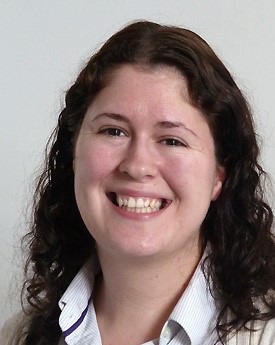
             &nbsp\;Lisa Hampson is a Lecturer in Statistics at Lancaster U
 niversity. Her research interests are in clinical trials\, including group
  sequential tests and Bayesian methods for trials in rare diseases and dos
 e-escalation. Her recent research has focused on developing methods for cl
 inical trials of new medicines for children. She holds a PhD in Statistics
  from the University of Bath.&nbsp\;\n        \n    \n\n\nTo access the re
 cording\, please visit the Video-on-Demand Library.
DTEND:20161116T153000Z
DTSTAMP:20260310T005156Z
DTSTART:20161116T140000Z
LOCATION:
SEQUENCE:0
SUMMARY:PSI Scientific Committee Webinar: Rare Diseases: Regulatory and Stu
 dy Design Considerations
UID:RFCALITEM639087007165655293
X-ALT-DESC;FMTTYPE=text/html:<p>&nbsp\;</p>\n<table class="PSI-default-tabl
 e" style="width: 100%\;">\n    <tbody>\n        <tr class="PSI-default-tab
 leTableEvenRow">\n            <td class="PSI-default-tableTableFirstCol" c
 olspan="2"><strong>U.S. regulatory considerations and case studies for rar
 e diseases</strong><br />\n            In this talk\, I will present an ov
 erview of the U.S. Food and Drug Administration&rsquo\;s policies and prac
 tices for encouraging development of products for rare diseases and of eva
 luating clinical evidence for the safety and effectiveness of such product
 s. I&rsquo\;ll discuss study designs that may be particularly appropriate 
 for rare disease product development\, and address some of their statistic
 al implications. Finally\, I&rsquo\;ll present case studies of products th
 at were approved for rare diseases using unusual or innovative study desig
 ns and/or regulatory pathways.<br />\n            <br />\n            </td
 >\n        </tr>\n        <tr class="PSI-default-tableTableOddRow">\n     
        <td class="PSI-default-tableTableFirstCol" style="width: 150px\;"><
 span data-sfref="[images|OpenAccessDataProvider]eb54b7ff-3ad6-65b3-a176-ff
 00001f6b97" class="sfImageWrapper"><img src="https://www.psiweb.org/images
 /default-source/default-album/john-scott.jpg?sfvrsn=2182d2db_0&amp\;MaxWid
 th=300&amp\;MaxHeight=&amp\;ScaleUp=false&amp\;Quality=High&amp\;Method=Re
 sizeFitToAreaArguments&amp\;Signature=DFDDEC2A6509C8E414E783F59C7CE217" di
 splaymode="Custom" alt="John Scott" title="John Scott" method="ResizeFitTo
 AreaArguments" customsizemethodproperties="{'MaxWidth':'300'\,'MaxHeight':
 ''\,'ScaleUp':false\,'Quality':'High'}" style="margin-top: 10px\;" /></spa
 n>&nbsp\;</td>\n            <td class="PSI-default-tableTableLastCol">&nbs
 p\;John Scott is Deputy Director of the Division of Biostatistics in the F
 DA's Center for Biologics Evaluation and Research\, where he has also serv
 ed as a statistical reviewer for blood products and for cellular\, tissue 
 and gene therapies. Prior to joining the FDA in 2008\, he worked in psychi
 atric clinical trials at the University of Pittsburgh Medical Center and d
 id neuroimaging research with the Neurostatistics Laboratory at McClean Ho
 spital\, Harvard Medical School. He has authored or co-authored numerous a
 rticles in areas including Bayesian and adaptive clinical trial design and
  analysis\, drug and vaccine safety\, data and text mining\, and benefit-r
 isk assessment. He holds a Ph.D. in Biostatistics from the University of P
 ittsburgh and an M.A. in Mathematics from Washington University in St. Lou
 is\, and is an associate editor of the journal\, Pharmaceutical Statistics
 .</td>\n        </tr>\n    </tbody>\n</table>\n<br />\n<br />\n<table clas
 s="PSI-default-table">\n    <tbody>\n        <tr class="PSI-default-tableT
 ableEvenRow">\n            <td class="PSI-default-tableTableFirstCol" cols
 pan="2"><strong>Bayesian methods for the design and interpretation of clin
 ical trials in rare diseases</strong><br />\n            For studies in ra
 re diseases\, the sample size needed to meet a conventional frequentist po
 wer requirement can be daunting\, even if patients are to be recruited ove
 r several years. Rather\, the expectation of any such trial has to be limi
 ted to the generation of an improved understanding of treatment options. W
 e propose Bayesian approaches for the conduct of rare disease trials compa
 ring an experimental treatment with a control when the primary endpoint is
  binary or normally distributed. We describe processes which can be used t
 o systematically elicit from clinicians opinions on treatment efficacy in 
 order to establish Bayesian priors for unknown model parameters. The propo
 sed approaches are illustrated by describing applications to two Bayesian 
 randomised controlled trials\, namely a study in childhood polyarteritis n
 odosa and a study in chronic recurrent multifocal osteomyelitis. Once prio
 r distributions have been established\, consideration of the extent to whi
 ch opinion can be changed\, even by the best feasible design\, can help to
  determine whether a small trial is worthwhile.<br />\n            <div>&n
 bsp\;</div>\n            <br />\n            </td>\n        </tr>\n       
  <tr class="PSI-default-tableTableOddRow">\n            <td class="PSI-def
 ault-tableTableFirstCol" style="width: 150px\;">&nbsp\;<span data-sfref="[
 images|OpenAccessDataProvider]5355b7ff-3ad6-65b3-a176-ff00001f6b97" class=
 "sfImageWrapper"><img src="https://www.psiweb.org/images/default-source/de
 fault-album/lisa-hampson.jpg?sfvrsn=8983d2db_0" displaymode="Original" alt
 ="Lisa Hampson" title="Lisa Hampson" style="margin-top: 10px\;" /></span><
 /td>\n            <td class="PSI-default-tableTableLastCol">&nbsp\;Lisa Ha
 mpson is a Lecturer in Statistics at Lancaster University. Her research in
 terests are in clinical trials\, including group sequential tests and Baye
 sian methods for trials in rare diseases and dose-escalation. Her recent r
 esearch has focused on developing methods for clinical trials of new medic
 ines for children. She holds a PhD in Statistics from the University of Ba
 th.&nbsp\;</td>\n        </tr>\n    </tbody>\n</table>\n<br />\n<strong>To
  access the recording\, please visit the <a href="https://www.psiweb.org/v
 od">Video-on-Demand Library</a>.</strong><br />
END:VEVENT
END:VCALENDAR